Today, I’d like to share a podcast that fuels my curiosity and encourages creativity in my professional life. “Cautionary Tales” by Tim Harford is a favorite of mine, offering stories of misses and failures that provide invaluable lessons for both personal and professional growth.
Recently, I listened to an episode about Claude Shannon, an American mathematician and computer scientist who “frittered away” his time on ‘silly’ projects. Despite his unconventional work habits, Shannon’s contributions to computer science were groundbreaking. Often called the “father of information theory,” Shannon revolutionized the way we process and transmit information by developing the foundation for digital circuit design, data compression, and modern communication systems. This episode resonated with me, as I also enjoy exploring new hobbies and scientific experiments for fun, believing that such pursuits complement my professional life.
This theme raises an interesting question:
Are restlessness and “fritterin'” indispensable ingredients for a fulfilling and creative life?
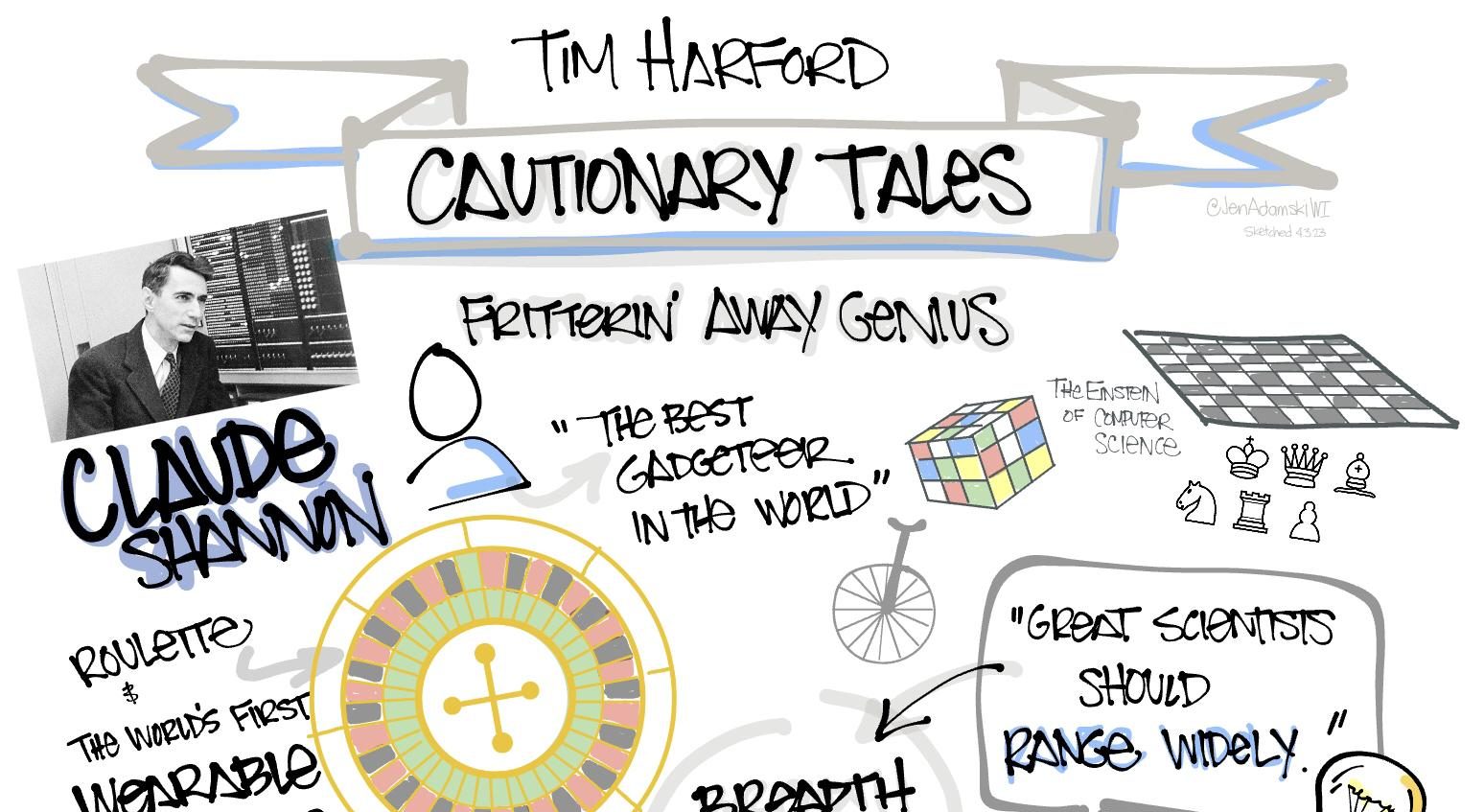
As I learned more about Shannon, and the concepts shared by Harford, I sketched the salient points.
- Claude Shannon, dubbed the best gadgeteer in the world, was known to putter around with chess, his unicycle, juggling, and writing poetry, to name just a few from his array of activities. He also ingeniously hacked roulette with his co-conspirators. (Listen to the podcast for the full story – it’s quite entertaining.)
- While at MIT, Shannon worked with Vannevar Bush, who emphasized the importance of breadth over depth, noting that, “Great scientists should range widely.” Bush also observed, “It is unfortunate when a brilliant and creative mind insists upon living in a modern monastic cell.”
- Bernice Eiduson’s study found that juggling multiple projects is not only common but the norm among top scientists. By examining the lives of Newton, Einstein, and Darwin, she discovered that prize-winning scientists were even more likely to have time-consuming side interests.
- The episode highlighted the importance of being flexible and willing to move on from a stalled project, and emphasized the dangers of completion bias. (Completion bias is the tendency to focus on finishing tasks that are easy or quick to complete, often at the expense of more important or complex tasks. This psychological phenomenon occurs because completing tasks gives us a sense of accomplishment and progress, giving our brains that ‘dopamine hit’ which provides a feeling of satisfaction.)
- My favorite takeaway was Hartford’s closing remark that a life that is too predictable creates few memories. This encourages us to embrace the unpredictable and cherish the diverse experiences that shape our lives.
So, what valuable nuggets can we unearth from Claude Shannon’s life and the wisdom of “Cautionary Tales”?
- Embrace restlessness and curiosity: Venturing into diverse interests can unlock innovation and success. Don’t shy away from exploring various projects and discovering new passions.
- Reframe “fritterin’ away” time as a creative investment: Time devoted to hobbies or offbeat projects can fuel creativity, sharpen skills, and eventually propel your professional success.
- Learn from failures and misses: As “Cautionary Tales” demonstrates, reflecting on the experiences of others and applying those lessons to our own lives can provide priceless insights.
By carving out time for creative exploration, limiting distractions, and embracing our curiosity, we can create an environment that nurtures innovation and personal growth.
What Does This Look Like in Practice?
Finding time for intentional creativity can feel like searching for a needle in a haystack. Limiting my consumption of mainstream entertainment helps me prioritize creativity and regain some time. I’ve pretty much given up on keeping up with the latest shows and embraced educational streaming services like CuriosityStream and Nebula instead. (These days, my rare binge-fests include throwbacks like ‘Murder, She Wrote’ and ‘Star Trek TNG’ on DVD.)
On weekends, I set intentional goals, focusing on projects or adventures that feed my mind and ignite my creativity. This approach has led me to explore new territories, helped me pick up new skills, and sometimes is the catalyst for a eureka moment. Some of that weekend time “fritterin'” also includes simple pleasures like crosswords and word searches, as my brain is wired to love language and word activities. I’m also thankful to have a partner who brings a mathematical and engineering bent to these adventures. Oftentimes one of our questions or experiments will result in a flurry of data gathering and spreadsheet creation. Below are some of the ‘sillier’ examples. Even with off-the-wall ideas like this, we still learn new things!
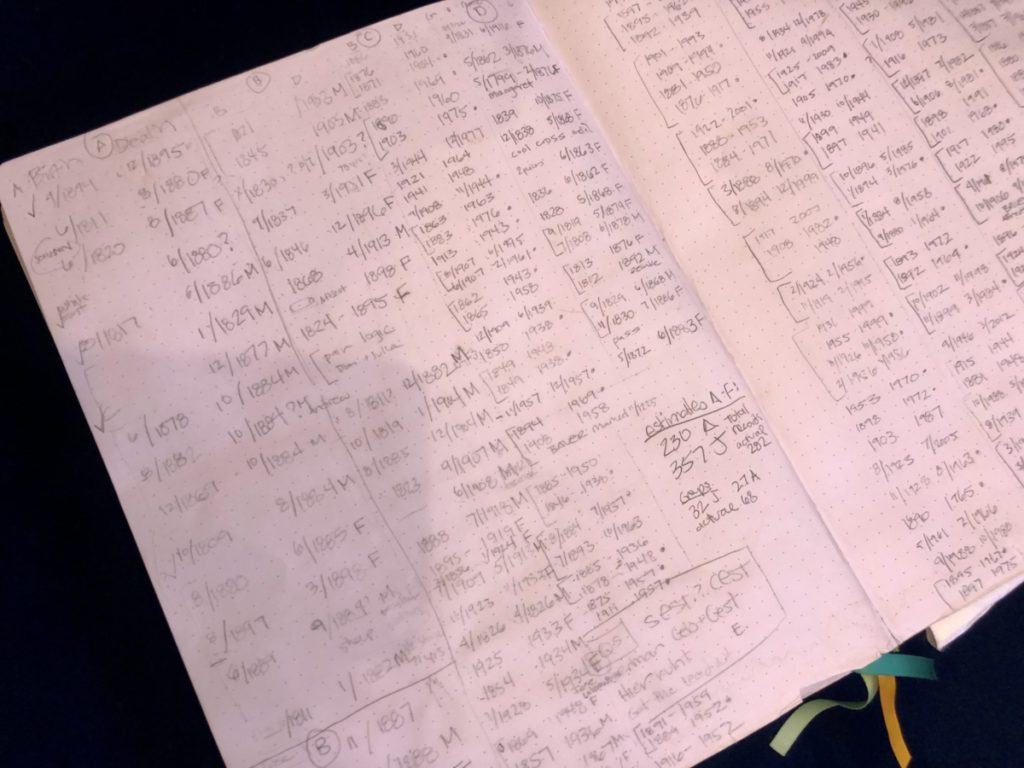
What’s On Your Tombstone? We randomly spent a Summer day in a nearby cemetery gathering pages of data, shown here. And we learned some new traditions and words, in German!
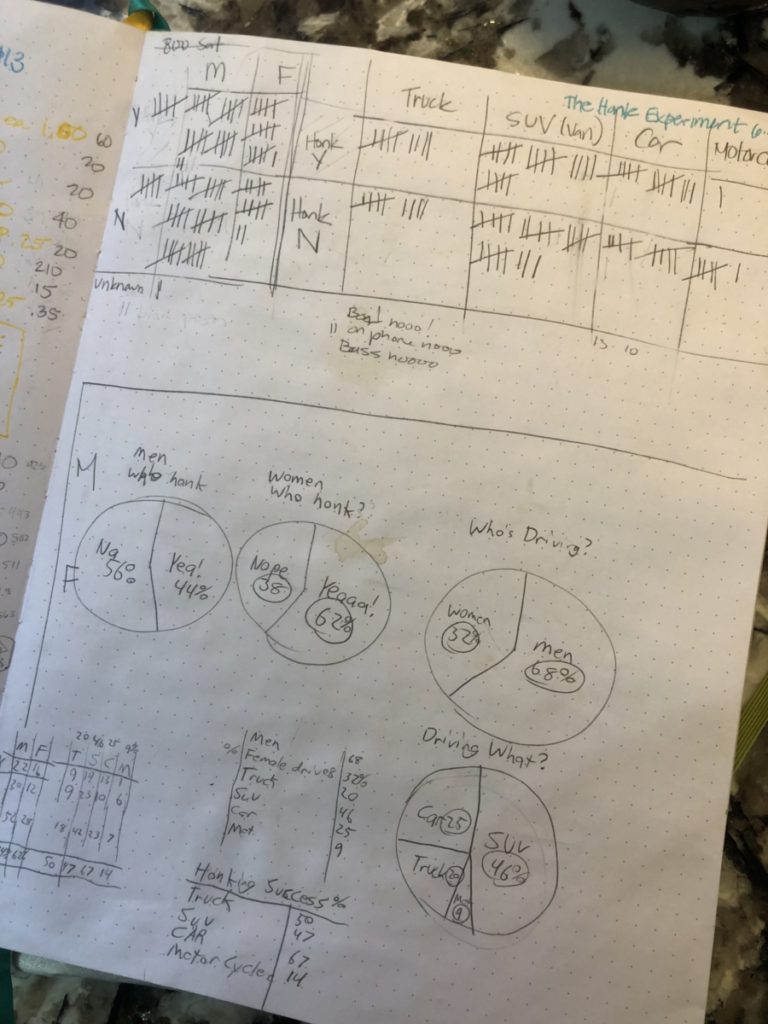
The Great Honk Experiment – Another warm evening, we perched ourselves at the end of a country driveway, pumping our fists to encourage passersby to honk. We logged the data across several points, and made a number of toasts to the most entertaining drivers.
Want to Dabble More?
Here are a few tips to help you embrace your own “fritterin’ away” time for a more creative and fulfilling professional life:
- Set aside dedicated time for creativity: Allocate specific times in your schedule for creative pursuits, whether it’s during weekends or a few hours every evening. Involve your kiddos if it’s hard to find solo time. This commitment can help establish a routine that fosters innovation.
- Engage in activities that align with your passions: If you love language, indulge in crosswords or word searches. If you’re more artistically inclined, set aside time for sketching, painting, or even sculpting. The key is to find activities that resonate with your interests and allow your creativity to flourish.
- Connect with like-minded individuals: Share your interests and creative pursuits with others who share your passions. Join groups, clubs, or online communities where you can exchange ideas, collaborate, and gain fresh perspectives. (My local game shop’s Discord server has been great for this.)
- Be open to new experiences: Challenge yourself to step out of your comfort zone and try new activities, even if they seem unrelated to your primary field. You never know what might spark your next big idea or creative breakthrough.
- Celebrate your successes and learn from your failures: Don’t be too hard on yourself when things don’t go as planned. Embrace the lessons learned from these experiences and use them to inform your future endeavors.
By incorporating these strategies into your daily life, you can nurture your creativity, embrace restlessness, and ultimately unlock greater success.
Let’s dive into the world of “fritterin’ away” and unleash our untapped potential. Happy exploring, and may you discover new passions, skills, and insights on this exciting journey.
Resources
Cautionary Tales – Fritterin’ Away Genius (includes further reading and sources)
Quanta Magazine – How Claude Shannon Invented the Future
Observer – 10,000 Hours With Claude Shannon: How a Genius Thinks, Works and Lives