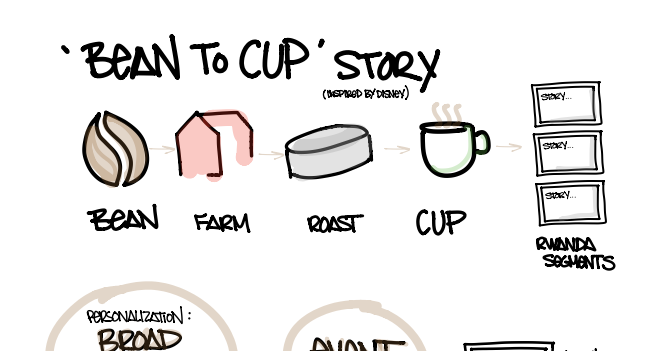
As a marketer with experience working with Fortune 500 companies like McDonald’s and Starbucks, I’ve seen firsthand the impact that visual storytelling can have on a brand. (One such example is Starbucks’ ‘bean to cup’ journey, sketched above.) By taking a visual storytelling approach, you can create a narrative that speaks louder than words, and connects with your audience on a deeper level. This approach enables you to communicate complex ideas and emotions quickly and effectively.
Think about the last time you saw an ad that made you laugh, cry, or feel inspired. Chances are, it was using visual storytelling to connect with you on an emotional level.
So, what is visual storytelling? It’s the use of images, videos, and other visual media to tell a story. This can be done through advertising, social media, websites, and other marketing channels. The key is to create a narrative that resonates with your audience and to use images that reinforce that narrative.
5 Reasons Why Visual Storytelling is a Powerful Tool:
- Connect with your audience emotionally: Humans are wired to respond to visual stimuli. By using images and videos to tell a story, you can connect with your audience on an emotional level, making your brand more relatable and memorable.
- Stand out in a crowded market: With so much content vying for our attention, it’s crucial to find ways to make your brand memorable. By using unique, striking, or unexpected visuals, you can create a visual identity that sets your brand apart from competitors. (One MIT study found that content with visually appealing imagery received 94% more views than content without.)
- Educate and build trust: Visual storytelling can be used to educate your audience and build trust in your brand. For example, if you’re a healthcare practitioner, you can use visual storytelling to explain complex medical concepts or to showcase patient success stories. By using images and videos, you can make your message more accessible and engaging.
- Reinforce brand identity: Visual content is not just about grabbing attention, but also about reinforcing your brand’s identity and message. By utilizing design principles such as scale and visual hierarchy, you can create impactful imagery that captures attention and reinforces your brand identity. (Color can increase brand recognition by up to 80%, and consistent brand presentation across all platforms can increase revenue by up to 23%.)
- Benefit for businesses of all sizes: Visual storytelling is not just for big companies. Small businesses and startups can also use this technique to make a big impact and connect with their target audience.
Visual content is processed 60,000 times faster than text, and people remember 80% of what they see compared to only 20% of what they read.
Visual storytelling is a powerful tool that can help your brand connect with your audience, stand out in a crowded market, educate and build trust, and communicate complex ideas and emotions. So the next time you’re planning a marketing campaign, consider taking a visual approach – a picture is worth a thousand words!

Visual content from the ‘Resilient Communities’ Series hosted by The Johnson Foundation at Wingspread
Resources:
https://blog.hubspot.com/marketing/visual-content-marketing-strategy
https://ifvp.org/content/why-our-brain-loves-pictures
https://www.t-sciences.co/news/humans-process-visual-data-better